
What is Arcadia?

Arcadia is in fact a real place. A land locked region in the centre of Greece surrounded by mountains.
It takes its name from the mythological character Arcas and in Greek Mythology was the home to the Gods Hermes and Pan.

During the Renaissance period in Europe, Arcadia begins to be depicted in art as an unspoiled, harmonious wilderness. However, in literature, we see it first mentioned as this in the 3rd Century BC by Theocritus, a Greek poet. He pioneered pastoral poetry, idyllic scenes of shepherd life in harmony with nature, which later writers would associate with the region of Arcadia. He idealises a rustic and simple life in the natural landscape.
The themes later influence other writers and artists who continue with the idea of Arcadia as a symbol of an idyllic existence.
Theocritus’ ideas were further developed by another poet, Virgil. Virgil added more layers to the idea of Arcadia in his set of Eclogues. There are 10 poems in Virgil’s Eclogues, maybe a reason why there are 10 tracks on Even in Arcadia. A set of Vessels own Eclogues to Arcadia?
Virgil’s vision on Arcadia was much more complex than Theocritus which in turn shapes the idea of Arcadia in Western Arts and Literature.
Arcadia in arts and literature

These themes are likely to have influenced the poem named Arcadia by Jacopo Sannazaro written in 1480. The poems tell the story of a young man named Sincero, who leaves his home in Naples after heartbreak and travels to Arcadia, where he meets a group shepherds. He joins them in their celebrations of a spring festival in honour of the Goddess Pales and takes part in singing contests. They remember their lost loves and seek a magician who says he can cure lovesickness. The poem repeatedly covers themes of melancholy, with the shepherds constantly singing about the difficulties of love, the sadness of death, nostalgia and the passage of time. Sincero leaves Arcadia and is guided home by a nymph through an undersea passage only to find that Naples is still full of woe and sorrow when he returns. The final part of the poem is a moving elegy to death.
He learns that escaping the world doesn’t fix the pain you ran from. Arcadia is not a paradise free of bad things, it is temporary refuge, not salvation. A place where you process grief and loss, not where those emotions disappear. It’s a place where after the collapse you learn to exist with what remains. Vessel himself is this figure retreating into Arcadia after emotional ruin.
So, Arcadia is showing paradise exists, beauty exists. But so does loss and death. You don’t eliminate them you learn to walk beside them. A theme the repeatedly comes up in Vessel’s journey.
As we can see that while the seeds of Arcadia were grown in Ancient Greece with poets like Theocritus, Virgil, and Sannazaro, it’s during the Renaissance that the idea of Arcadia as a symbol of a Utopia and a Memento Mori truly flowered – ‘Et in Arcadia ego’.
Our “A-ha!” moment

‘Et in Arcadia Ego’ translates roughly to ‘Even in Arcadia, here I am’ or ‘I am too in Arcadia’ and is a memento mori (sound familiar?!). A philosophical phrase said to be spoken by Death itself, used as a reminder death being inescapable. That even in paradise death is still unavoidable. A tool for perspective, changing the inevitability of death into a motivator for living a more purposeful life.
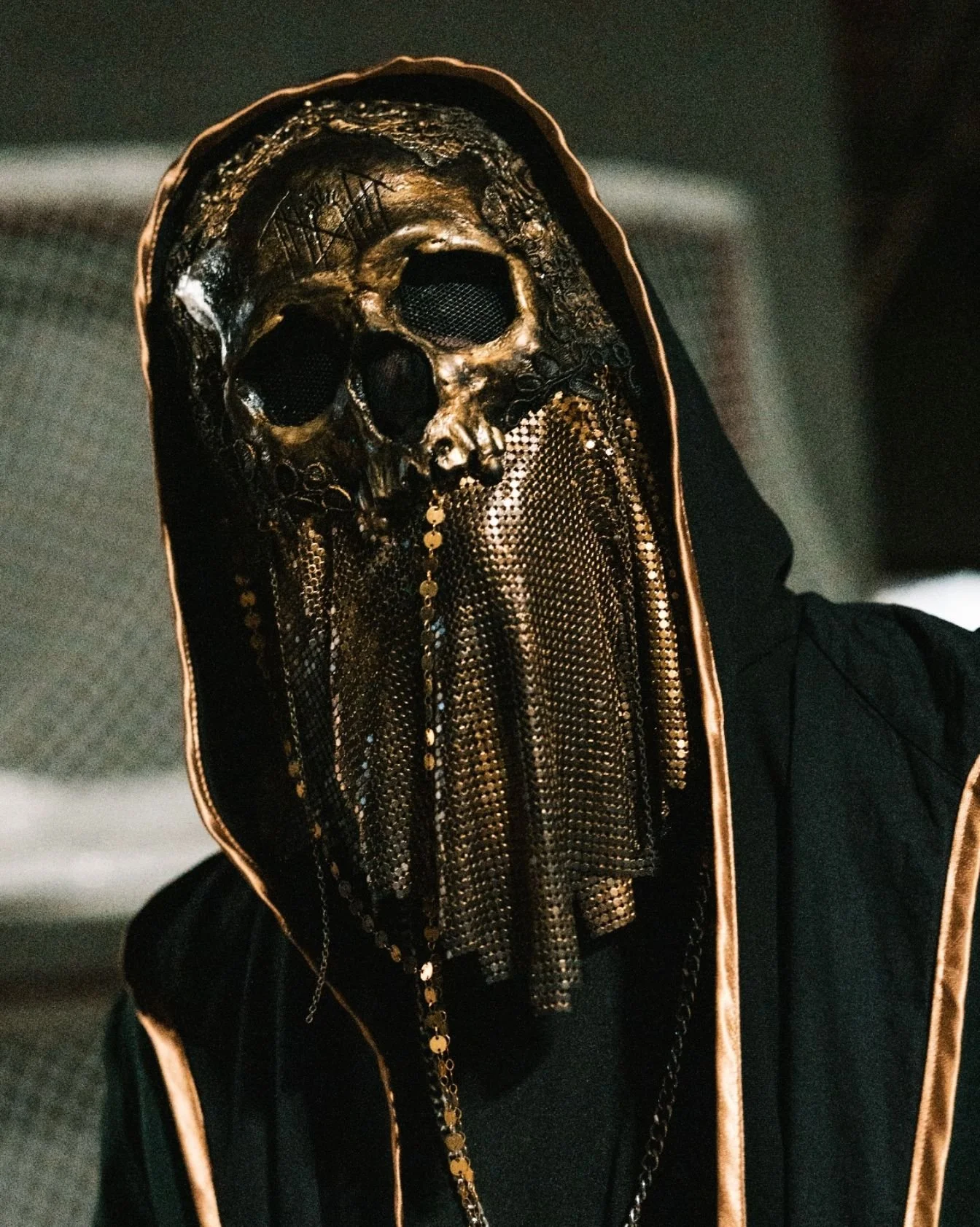
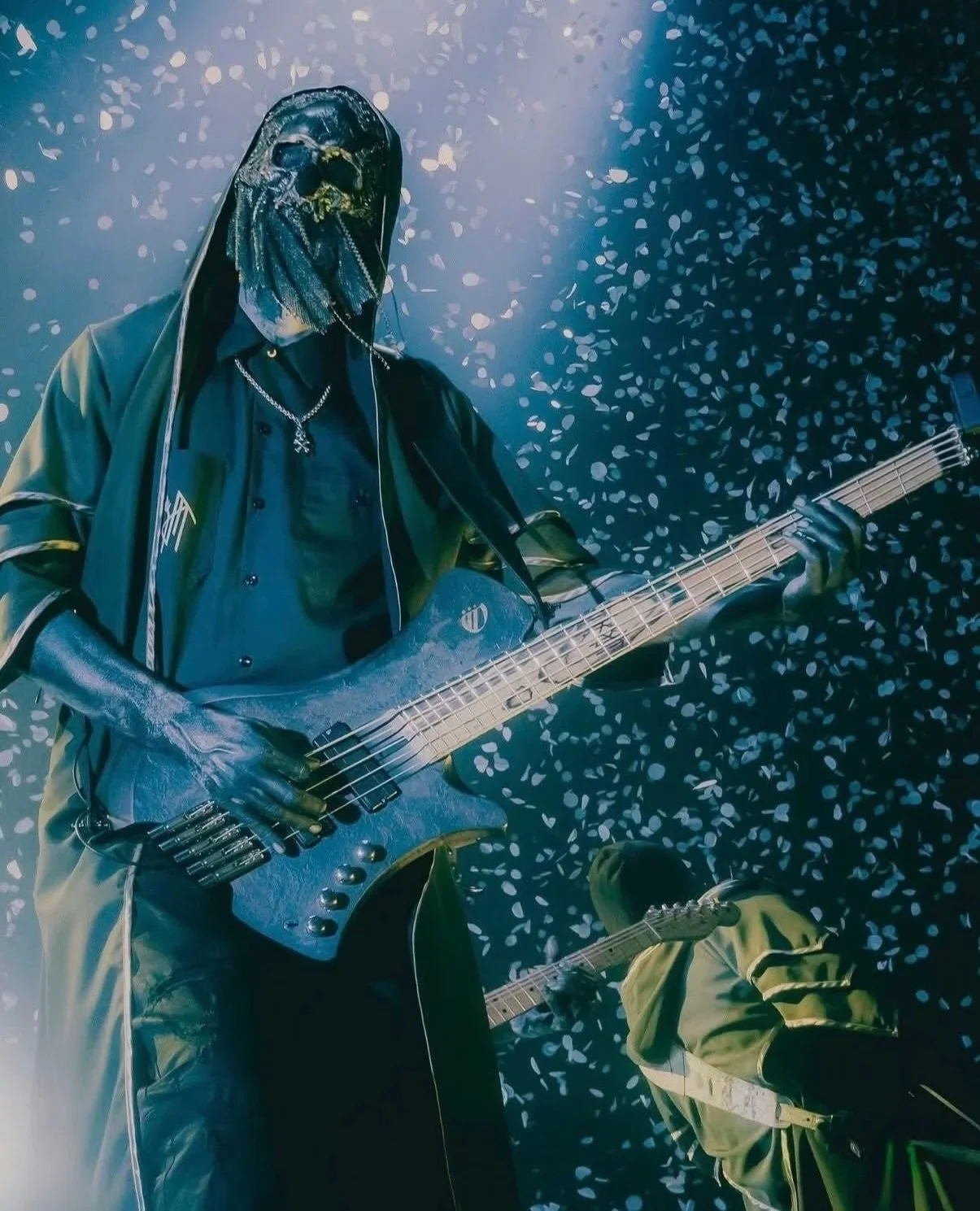
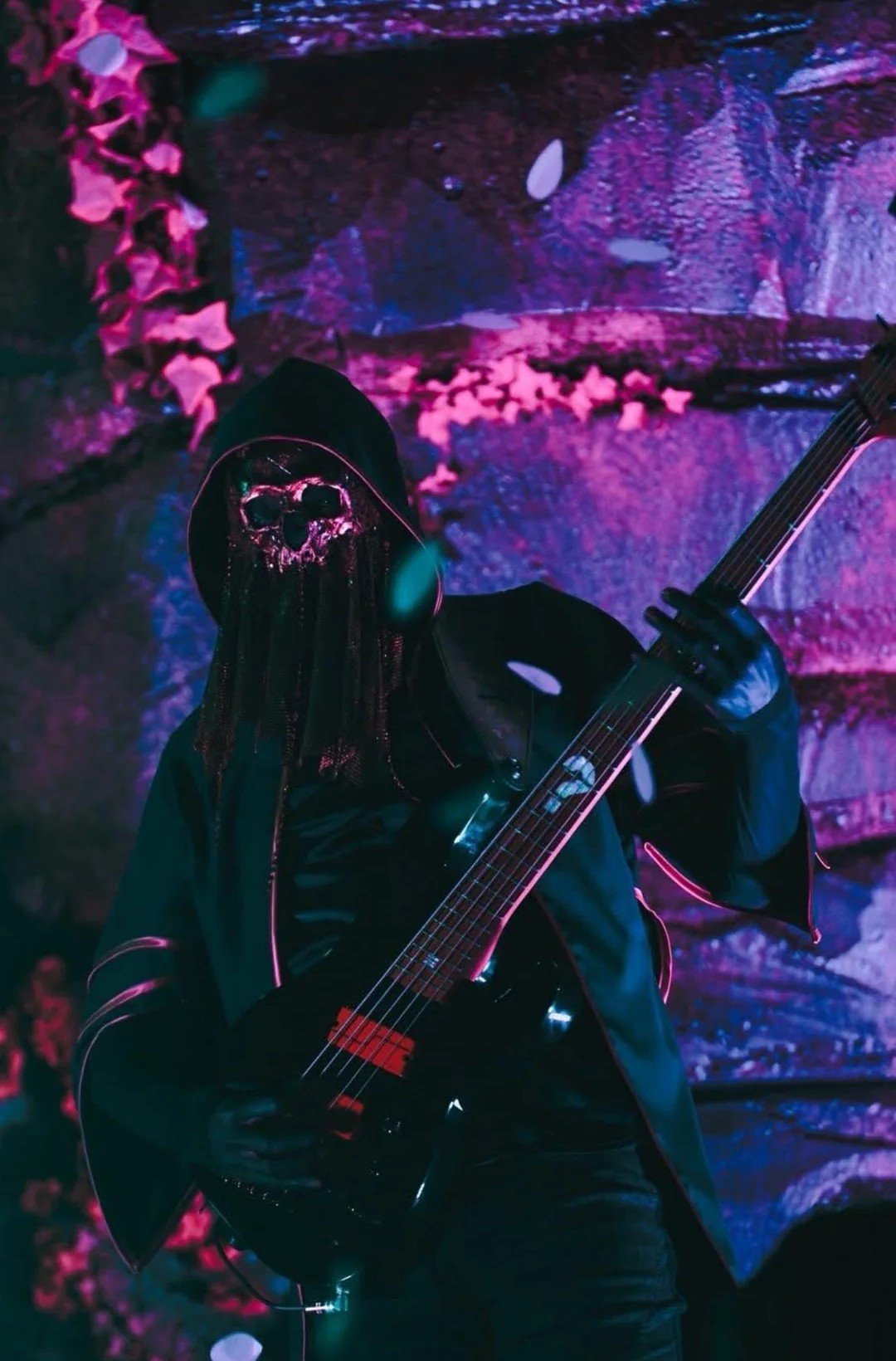
Et in Arcadia Ego first appears in Renaissance paintings in 1618 in a painting by Guercino, depicting two young shepherds looking at a skull (a symbol of memento mori) placed on a pedestal engraved with the words ‘Et in Aradia ego’. It is believed this is the first time the phrase is used, showing humanity coming face-to-face with the inevitability of death, regardless of your harmonious, idyllic surroundings. Could this skull have inspired the new masks worn by II, III and IV? We believe so, Vessels own memento mori encouraging him to be free of burden, able to live his life to the full.
‘Et in Arcadia Ego’ appears for a second time in a painting (version 1) by Poussin in 1630. Poussins first of two painting titled ‘Et in Arcadia ego’.
We again see Shepherds, this time gathered around a tomb engrave with the phrase. They are this time accompanied by a woman.
Just eight years later Poussin paints his second painting of Arcadia, ‘Et in Arcadia version 2’ 1638.
In this painting we can again see the shepherds gather around a tomb engraved with Et in Arcadia Ego. They lean forward trying to understand the message and one traces the shadow of the letters with his finger, attempting to decipher them. Standing slightly apart is a woman observing the scene.
Historians believe the shepherds represent humanity discovering the truth of mortality. The tomb’s inscription reminds them that even in the paradise of Arcadia, death exists.
The woman is often interpreted as a figure of wisdom or understanding, calmly observing the moment when the shepherds realise this truth. Unlike the shepherds, the woman does not lean over the tomb or attempt to read the inscription. She stands upright and composed, as though she already understands what the others are only just discovering. Within the symbolic framework we see in Sleep Token’s narrative, this figure closely resembles the role of Kali in Vessel’s journey. Kali is not a companion walking beside him through Arcadia, but the catalyst who initiated his transformation observing his journey. Like the woman in Poussin’s painting, she stands outside the struggle, observing as he confronts the truths he once tried to escape.Arcadia in literature is not a perfect paradise but a place where grief and beauty exist side by side. In this way the painting mirrors Vessel’s journey: a moment where the illusion of escape fades and the reality of mortality, loss and transformation must finally be faced.
The themes of ‘Et in Arcadia Ego’, renaissance philosophy and the pastoral poems link back in with the principles of Jungian Psychology, specifically the shadow self, again tying in the many things that Vessel uses in his narrative.
Et in Arcadia Ego
Et in Arcadia Ego by Guercino
Et in Arcadia (version 1) by Poussin
Et in Arcadia (version 2) by Poussin
The monument was built sometime between 1748 and 1756 on the Shugborough Estate and is a mirror image of Poussins painting depicting three shepherds gathered around a tomb accompanied by a woman who is observing them.
Sleep Token used the monument as a clue during the run up to the release of Even In Arcadia.
The mysterious inscription of the letters O U O S V A V V, between the letters D M have puzzled historians since the 18th century. People have proposed everything from Latin memorial phrases to secret messages tied to the Knights Templar or even the Holy Grail. We, however, do not believe the inscription is relevant to Sleep Token.
The Shugborough Monument

As we can see the idea of Arcadia was a carefully selected piece of history, arts and literature that Vessel has used to continue to tell the narrative of his journey of heartbreak, loss, betrayal, realisation and healing.